
IndiGo Collapse Was Just the Start — India’s Entire Aviation System Is Now Under Stress

India’s aviation sector entered 2025 with record passenger demand — but instead of smooth skies, flyers are witnessing mid-air turbulence injuries, emergency landings, cancellations, crew shortages, technical snags, and viral in-flight fights almost every single week.
This isn’t normal fluctuation. It’s a full-blown aviation stress phase, triggered by long-ignored structural weaknesses now exploding publicly.
This article breaks down real incidents, factual data, recent government actions, and expert-backed reasons behind the aviation mess.
1. The Trigger: IndiGo’s December 2025 Meltdown
The aviation crisis came into national spotlight when IndiGo, India’s largest airline with around 60–65% domestic share, slipped into operational failure in December 2025.
What happened:
-
Over 1,000 flights were cancelled in a single day in the first week of December.
-
For several consecutive days, 200–500 daily cancellations continued.
-
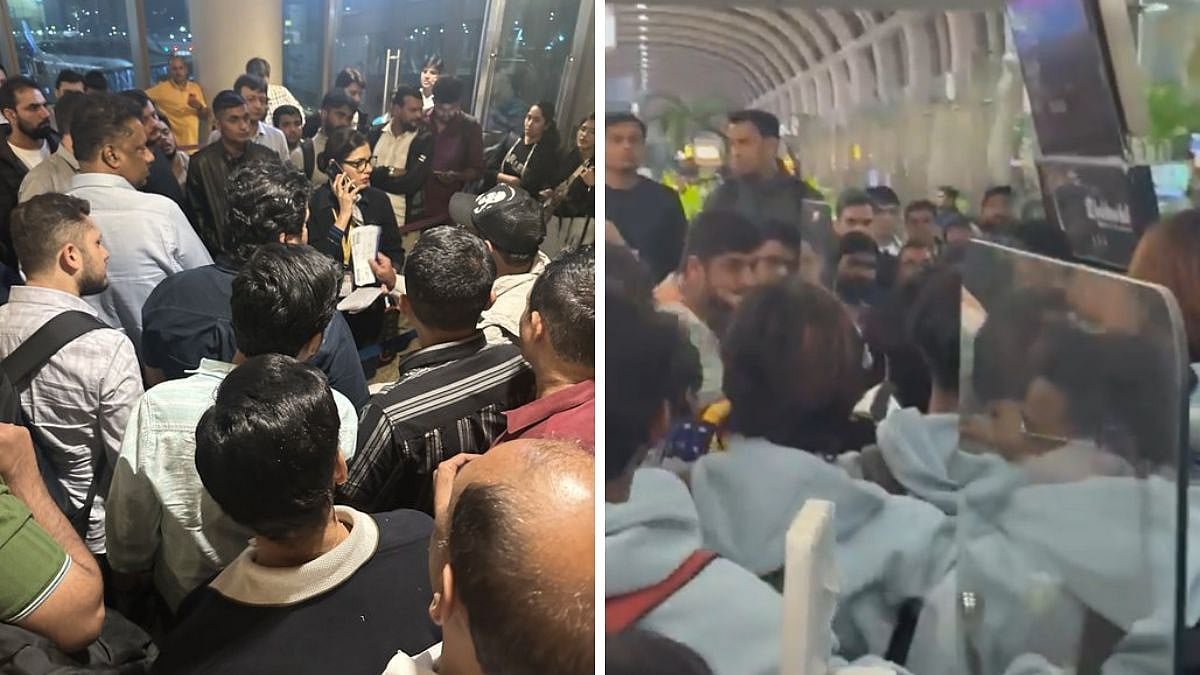
Airports in Delhi, Mumbai, Bengaluru, Hyderabad, Chennai, Indore and Bhopal faced massive crowds, long queues, and stranded passengers.
-
The chaos was so widespread that the Aviation Ministry and DGCA had to intervene directly.
Why it happened:
New pilot Flight Duty Time Limitation (FDTL) rules came into effect on 1 November 2025, increasing mandatory rest time and limiting late-night operations to reduce pilot fatigue.
IndiGo misjudged crew scheduling, leading to an unexpected shortage of cockpit crew exactly when holiday travel demand peaked.
This was not an isolated issue — it highlighted how fragile the aviation ecosystem has become.
2. The Numbers Prove It: Aviation Stress Is Real
A look at the data from 2023–2025 shows a clear pattern:
-
By mid-2025, DGCA had already received over 3,900 passenger complaints, almost 98% of all complaints filed in 2024.
-
Indian airlines recorded 183 technical snags in just the first half of 2025.
-
DGCA’s detailed safety audit flagged 263 safety-related lapses across airlines:
-
51 issues at Air India
-
23 at IndiGo
-
25 at Air India Express
-
-
In the last four years, airlines placed over 240 passengers on the “no-fly list” for mid-air violence, abuse and non-compliance.
The numbers tell a clear story: India’s aviation system is under pressure, and passengers are feeling the impact.
3. What Does “Mid-Air Chaos” Look Like?
It’s a combination of multiple types of incidents:
(a) Severe Turbulence Injuries
An Air India Delhi–Sydney (AI 302) flight reported multiple injuries after severe turbulence at cruising altitude.
Passengers suffered cuts, bruises and sprains.
This reflects a global trend: rapidly changing weather patterns and deep convective clouds are making turbulence more unpredictable.
(b) Emergency Returns & Technical Snags
Examples reported over recent months:
-
Air India’s Airbus A320 reportedly flew multiple flights with an expired airworthiness certificate, leading to internal investigation.
-
Several aircraft have made emergency landings due to engine vibration, cabin pressurization warnings, and fuel system alerts.
-
Airlines logged hundreds of technical anomalies each year, with unusually high utilisation of aircraft contributing to wear-and-tear.
While most snags are precautionary, they contribute significantly to public fear.
(c) Unruly Passenger Incidents
A major portion of “mid-air chaos” is linked to passenger behaviour:
-
Fights over seat reclining
-
Slapping incidents caught on camera
-
Drunk passengers threatening crew
-
Disobedience during turbulence warnings
The presence of smartphones has turned every incident into a national viral moment, magnifying the crisis narrative.
(d) Ground Chaos Turning Into Air Crisis
During the IndiGo meltdown:
-
Many flights from Bhopal and Indore saw over 50% cancellations.
-
Thousands of travellers slept overnight inside terminals.
-
Staff shortages meant no clear information on refunds or rebooking.
Even though these are ground issues, passengers see the entire experience as one aviation failure.
4. Why Is This Happening in 2025? The Root Causes
Here are the six real reasons behind the crisis:
1️⃣ Lean Staffing & Over-Ambitious Scheduling
Indian airlines push aircraft to the maximum number of daily hours.
Crew rosters are tight.
A small disruption — new rules, sick leave, stormy weather — triggers a domino wave of cancellations.
2️⃣ Regulatory Changes Exposed Structural Weakness
DGCA’s new FDTL rules were scientifically designed to reduce fatigue.
Airlines had time to prepare, but many underestimated the impact, leading to sudden crew shortages.
When operations collapsed, DGCA temporarily eased parts of the rulebook, creating a perception of confused aviation governance.
3️⃣ Technical & Maintenance Stress
High aircraft utilisation leads to:
-
More frequent engineering checks
-
Faster component fatigue
-
Increased cabin and engine alerts
-
Documentation lapses (as seen in the Air India certificate case)
Passengers interpret “technical snag” as aircraft danger, even if much of it is precautionary.
4️⃣ Weather Extremes & Turbulence Surge
Monsoon and winter turbulence over the Bay of Bengal, Arabian Sea and Himalayan corridors is rising.
More flights + more unpredictable turbulence = more injuries.
5️⃣ Social Media Outrage Amplifier
Every delay or fight turns into:
-
A viral video
-
A national debate
-
A flood of complaints
This makes the airline ecosystem appear even more chaotic.
6️⃣ Training & Safety Culture Gaps
DGCA’s audit revealed lapses in:
-
Pilot training
-
Simulator approvals
-
Documentation
-
Standard Operating Procedures
When internal systems are stressed, human error risk increases.
5. Is Flying in India Actually Unsafe?
Not unsafe — but unstable.
A few truths:
-
India still has a strong safety record with no major commercial crash in recent years.
-
Modern aircraft can withstand major shocks and multiple system failures.
-
Most emergency landings are precautionary, not life-threatening.
But the reliability, predictability and communication systems are weak — and that’s what passengers experience.
6. What Is the Government Doing?
Recent actions include:
-
High-level inquiry into IndiGo’s mass cancellations
-
Temporary relaxation of pilot duty rules for stabilizing flight schedules
-
24×7 aviation control rooms during peak crisis
-
Annual nationwide safety audits
-
Stricter reporting protocols for technical snags
-
Pressure on airlines to compensate and assist stranded passengers
However, reform needs to go deeper than emergency fixes.
7. What Needs to Change? (Long-Term Solutions)
✔ More realistic staff & crew planning
Airlines must maintain buffer crew instead of razor-thin rosters.
✔ Strict enforcement of fatigue rules
Pilot rest is non-negotiable for safety.
✔ Transparent maintenance reporting
Public dashboards can build trust.
✔ Better turbulence information
Frequent in-flight warnings + mandatory seatbelt communication.
✔ Behavioural crackdown on passengers
Stricter no-fly penalties for violence, abuse, and non-compliance.
✔ Culture change in airline management
Safety must be treated as a core brand asset.
8. What Passengers Should Do Now
1. Keep seatbelts fastened while seated
Most turbulence injuries happen to people without seatbelts.
2. Prefer morning flights
They are least affected by cascading delays.
3. Track your flight live
Use airport and airline apps for updates.
4. Maintain buffer time
If you have exams, interviews, or connecting trains — keep a 2–3 hour cushion.
5. Know your rights
DGCA compensation rules protect passengers during:
-
long delays
-
cancellations
-
denied boarding
Conclusion: India’s Aviation Crisis Is a Wake-Up Call
India aims to be a global aviation hub — but 2025 exposed how underprepared, overstretched and communication-poor the system is.
The current chaos is not due to one airline or one weather event.
It’s the result of aggressive expansion + inadequate buffers + rising turbulence + viral outrage + human fatigue all colliding at once.
Whether this becomes a long-term trust crisis or a turning point for real reform depends on what airlines and regulators do next.